
Water check first
With high groundwater common near the Lewis River, many Woodland crawl spaces see water in winter. If yours does, drainage or a sump goes in first, and the barrier goes over the top.
Barriers and seasonal groundwater
In homes near the Lewis River, the soil under a crawl space can get very wet in winter even when no water pools on top. A vapor barrier is designed for exactly that: it keeps moisture from the damp soil from rising into the crawl space air. Where water actually comes up through the soil and collects, though, a barrier alone can float, shift or trap water on top. That's why we check for active water first. If it's there, drainage and a sump come first; if it isn't, a well-installed barrier is often the most cost-effective improvement you can make.
The barrier
- Old, muddy plastic removed
- Soil fully covered, seams overlapped
- Fitted around piers, posts and pipes
- Run to the foundation walls
After water damage
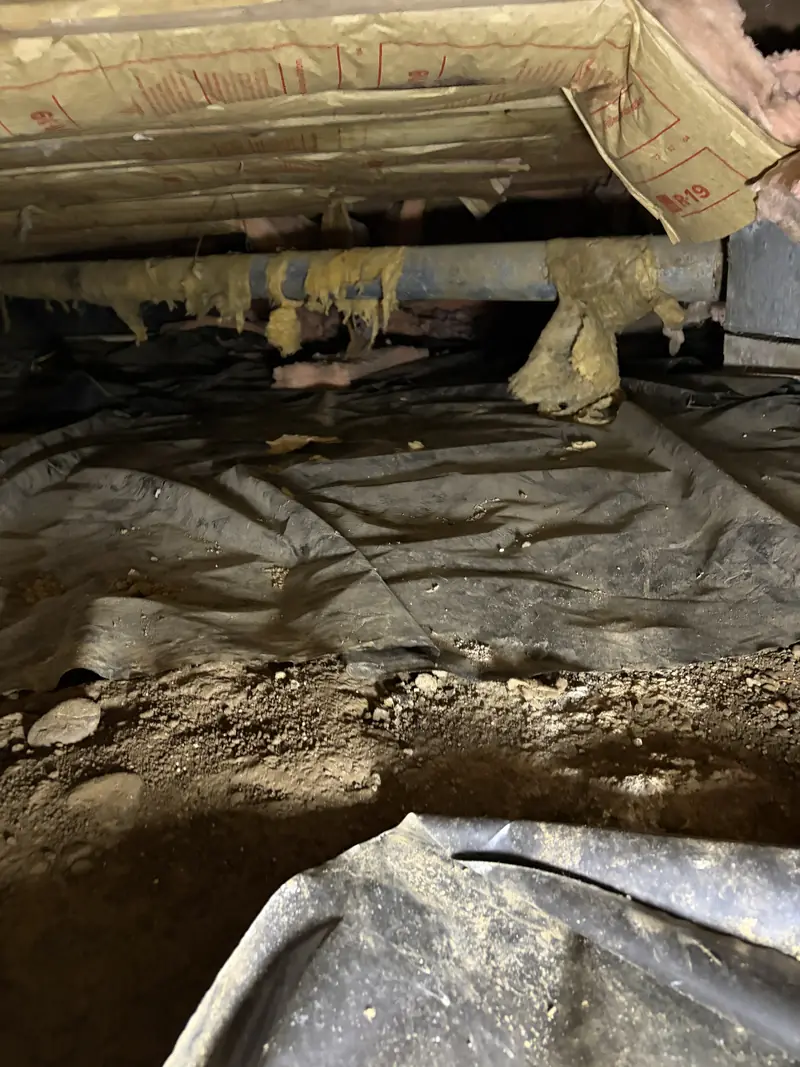
If water has been in the crawl space, the old plastic is often silty and torn. A cleanout clears it and any wet insulation before the new barrier goes in.
What affects the scope in Woodland
- Water management first
- Cleanup of silty plastic and debris
- Crawl space size
- Material
Check it after wet seasons
After a wet winter, take a look through the crawl hatch. Water sitting on the barrier, or plastic that has floated and shifted, means water management needs attention.
Questions from Woodland homeowners
Can a barrier go down over damp soil?
Yes. Standing water or mud should be handled first.
My plastic has water on top. What does that mean?
Water is getting in and has nowhere to go. Drainage is the fix.
How do I get an estimate?
Getting started is easy. Call or text (360) 470-4956, or fill out the form on this page. We'll learn what's going on beneath your home, schedule a time to take a look, and give you a straightforward vapor barrier estimate.